Market

Simple. More. Selection.

Everything from one source - heat transfer with different technologies

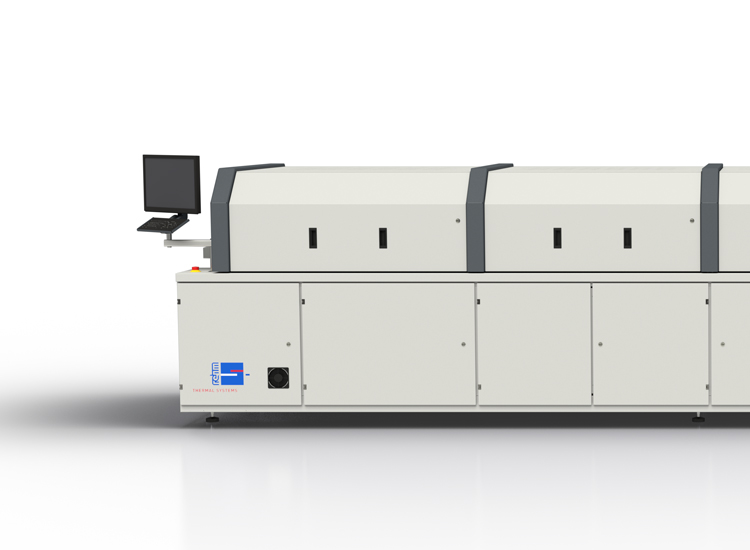
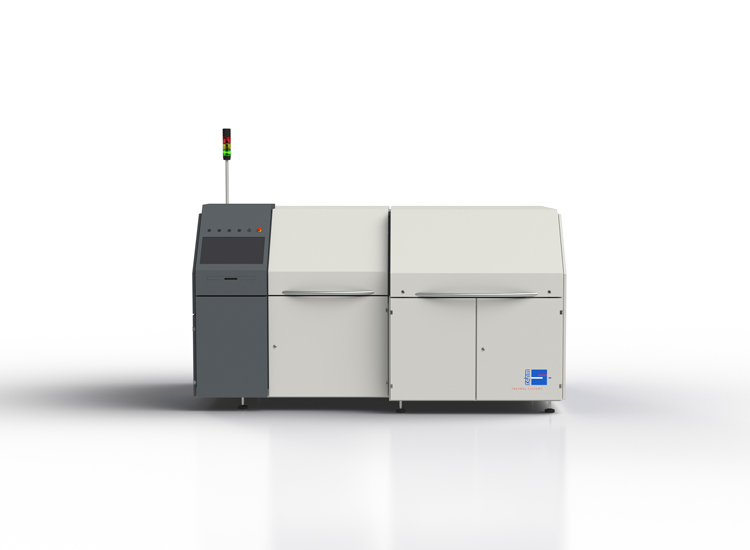
Convection Soldering

Convection soldering systems have controlled the largest share of the market since
the 1990s.The term convection is understood here as heat transfer by means of
fl owing liquids or gases. When liquids and gases are heated up, their density is
reduced and flow, circulation and convection are caused by the resulting lift. The
heat energy does not flow itself, but rather the medium, which in turn conducts the
energy. Convection is forced from outside by means of fans, blowers and nozzles in
convection refl ow soldering systems, which are usually operated with an air or a
nitrogen atmosphere.

As opposed to vapor phase systems, convection systems are usually equipped with
several process zones which can be adjusted independent of one another, thus
allowing for variable refl ow profiles.
 The temperatures of the process zones and the fl ow rate of the utilized gas, as well
as the conveyor speed, can all be varied in order to achieve the desired reflowprofile.
These widely variable process parameters open up a multitude of opportunities
for implementing thermal processes.

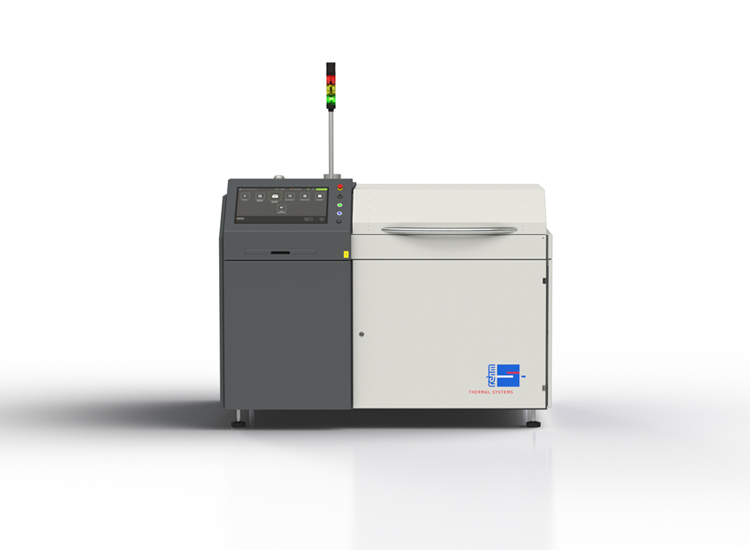
Condensation soldering

Already in 1975, condensation soldering, also known as vapor phase soldering, was
patented by Pfahl and Ammann, making it one of the oldest reflow soldering
processes. Condensation soldering makes use of heat released during the transformation
from the gaseous state (known as the vaporous state in colloquial language)
to the liquid state in order to heat up the PCB to be soldered. Temperature remains
constant during the medium’s change of state (phase transition), which assures that
the maximum temperature of the PCB cannot exceed the boiling point and the condensation
temperature of the medium. This form of maximum temperature limiting
represents a signifi cant advantage in favor of condensation soldering.

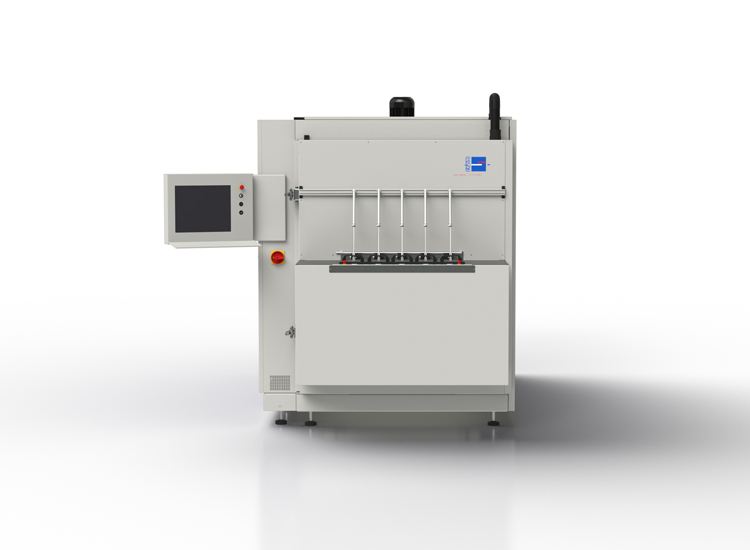
Vacuum

The Condenso soldering systems supplied by Rehm Thermal System are available
with an optional feature for generating a vacuum/underpressure
after soldering in order to remove any voids from molten solder joints. The quality
of the vacuum depends primarily on the vacuum pump which has been connected
to the process chamber. The PCBs to be soldered remain motionless within the
process chamber during the soldering and vacuum generation processes. This is a
signifi cant advantage.

> back


Convection versus Condensation


© Copyright by Rehm Thermal Systems GmbH